- Mintlify uses access tokens to pull information from GitLab.
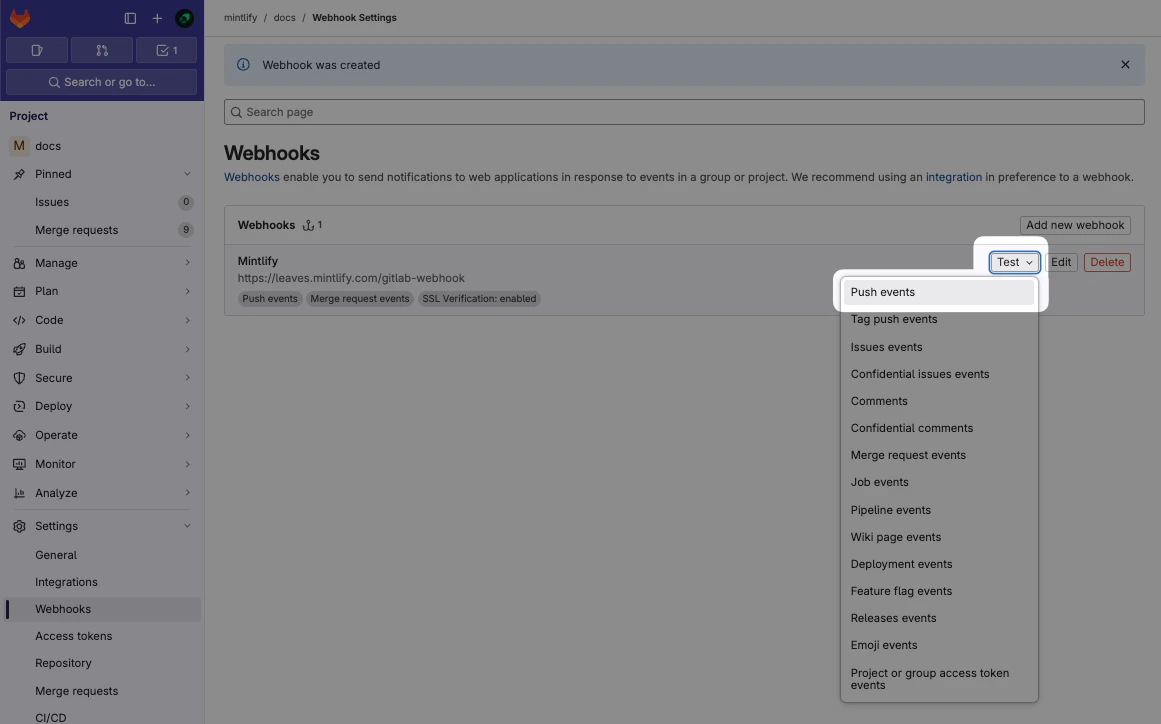
- GitLab uses webhooks to notify Mintlify when you make changes, which enables preview deployments for merge requests.
Set up the connection
When you open Git Settings for the first time, a setup wizard guides you through connecting your GitLab repository.Select GitLab as your provider
On the Git Settings page, select Connect to GitLab and click Continue.
Download your content
If your documentation is hosted by Mintlify, download it as a zip file.
- Create a new repository in GitLab.
- Extract the zip contents.
- Push the contents to your repository.
Find your project ID
In your GitLab project, navigate to Settings > General and locate your Project ID.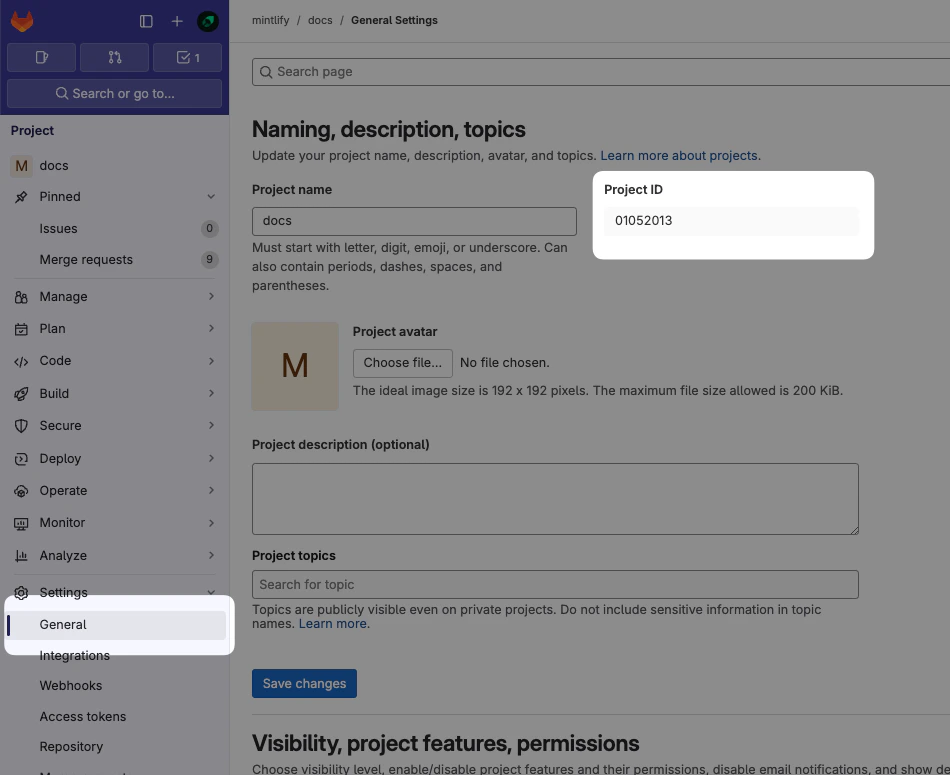
Generate an access token
Navigate to Settings > Access Tokens and select Add new token.Configure the token with these settings: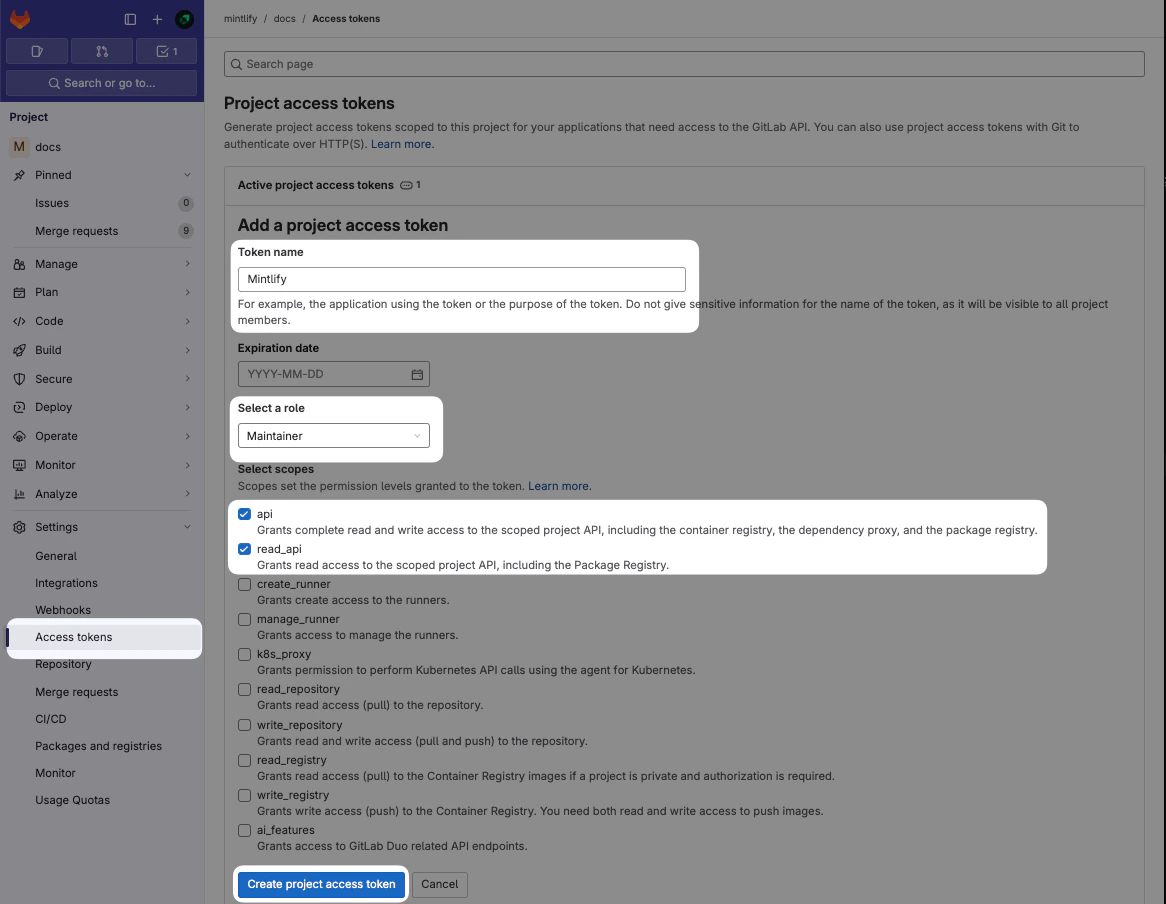
- Name: Mintlify
- Role: Maintainer (required for private repos)
- Scopes:
apiandread_api
If Project Access Tokens are not available, you can use a Personal Access Token instead. Note that Personal Access Tokens expire and must be updated.
Connect your repository
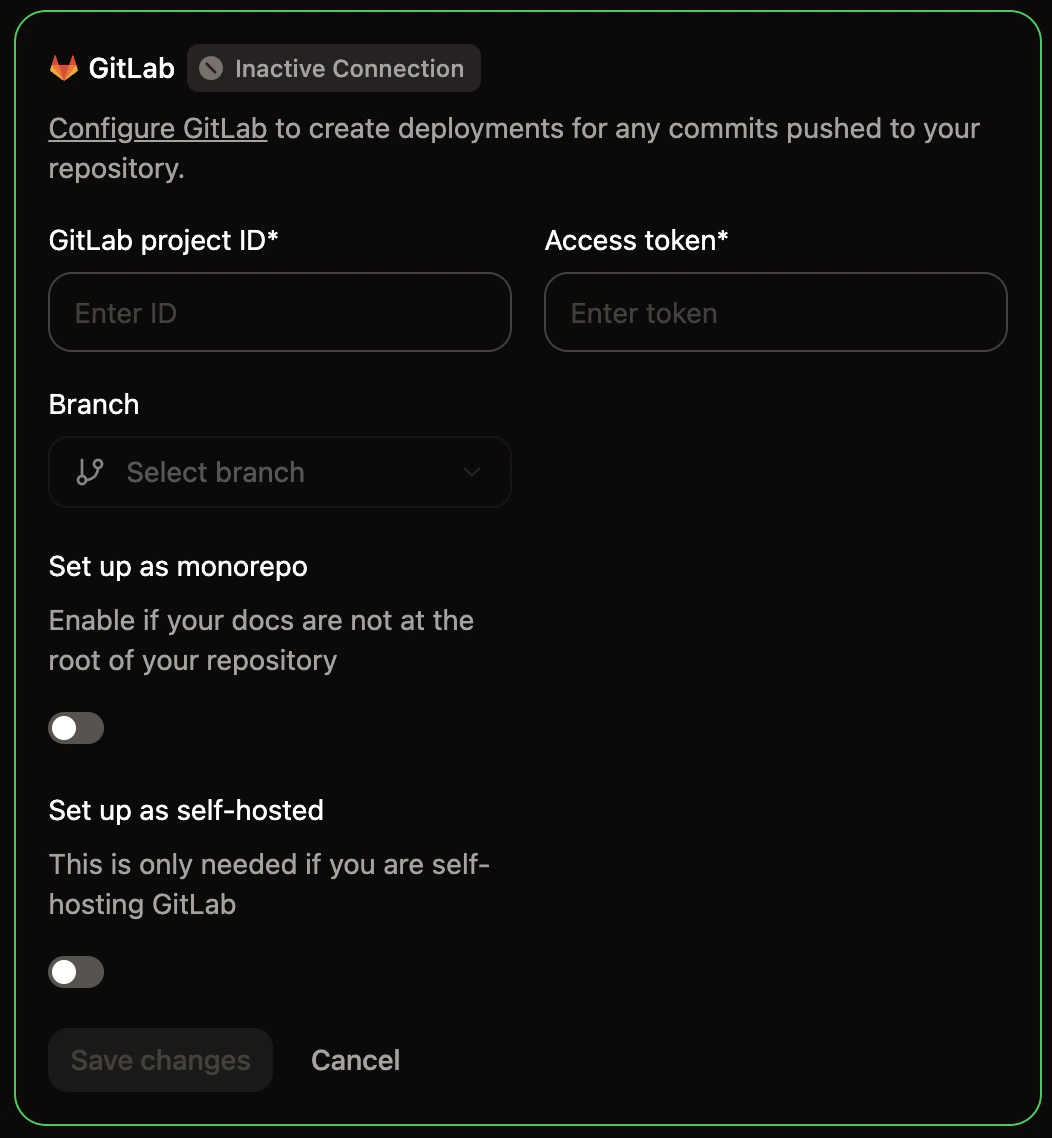
Back in the setup wizard, fill in the following fields: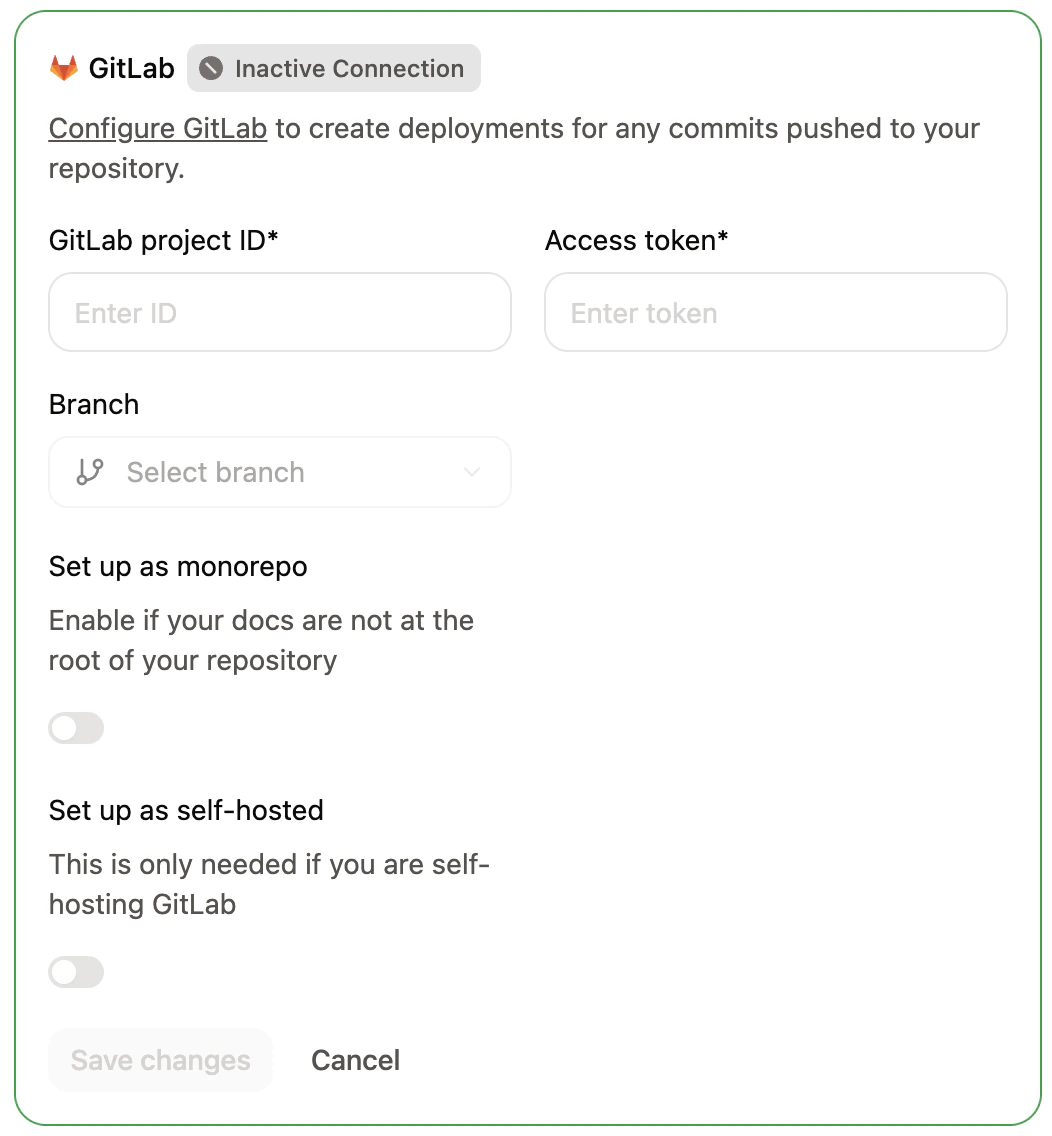
- GitLab instance URL: Leave blank for
gitlab.com, or enter your self-hosted instance URL (for example,https://gitlab.your-domain.com). Your instance must be publicly accessible for Mintlify to reach it. - Project ID: The project ID from your GitLab project settings.
- GitLab deployment token: The access token you generated.
- Branch: Select the branch to deploy your documentation from.
Update an existing connection
To modify your GitLab connection settings after the initial setup, go to Git Settings and update your project ID, access token, branch, or instance URL directly.Create the webhook
Webhooks notify Mintlify when you push changes so that deployments trigger automatically.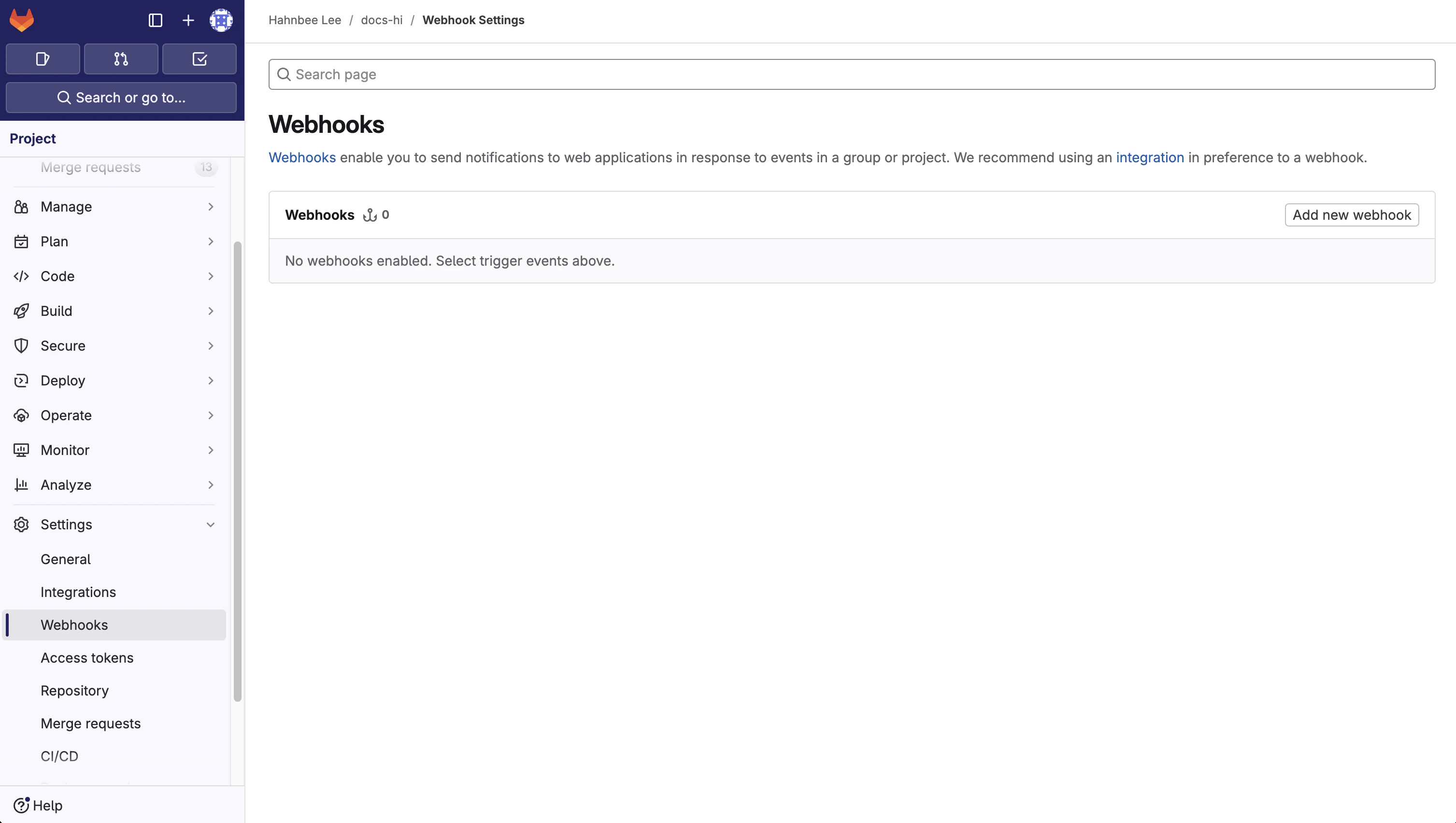
Set up URL and webhook
Name the webhook Mintlify.In the URL field, enter the endpoint
https://leaves.mintlify.com/gitlab-webhook.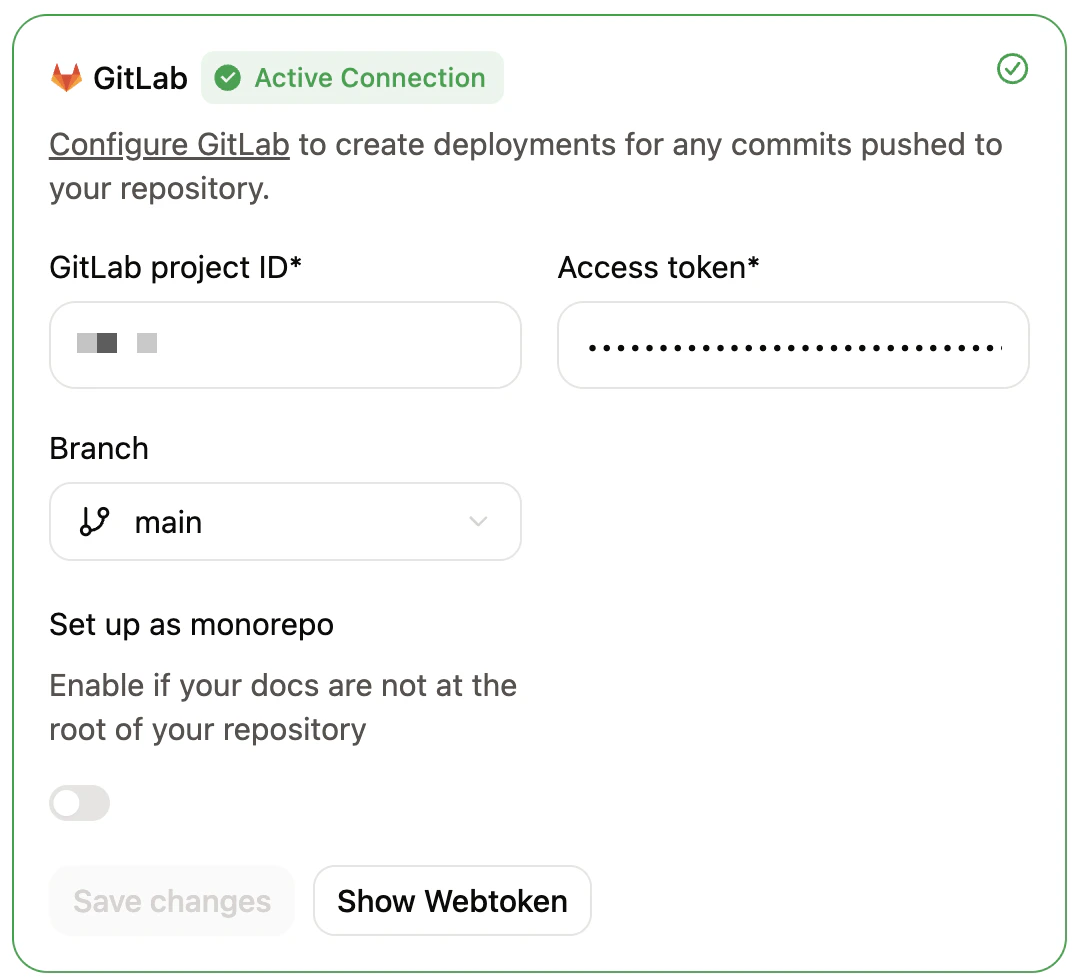
Paste webtoken
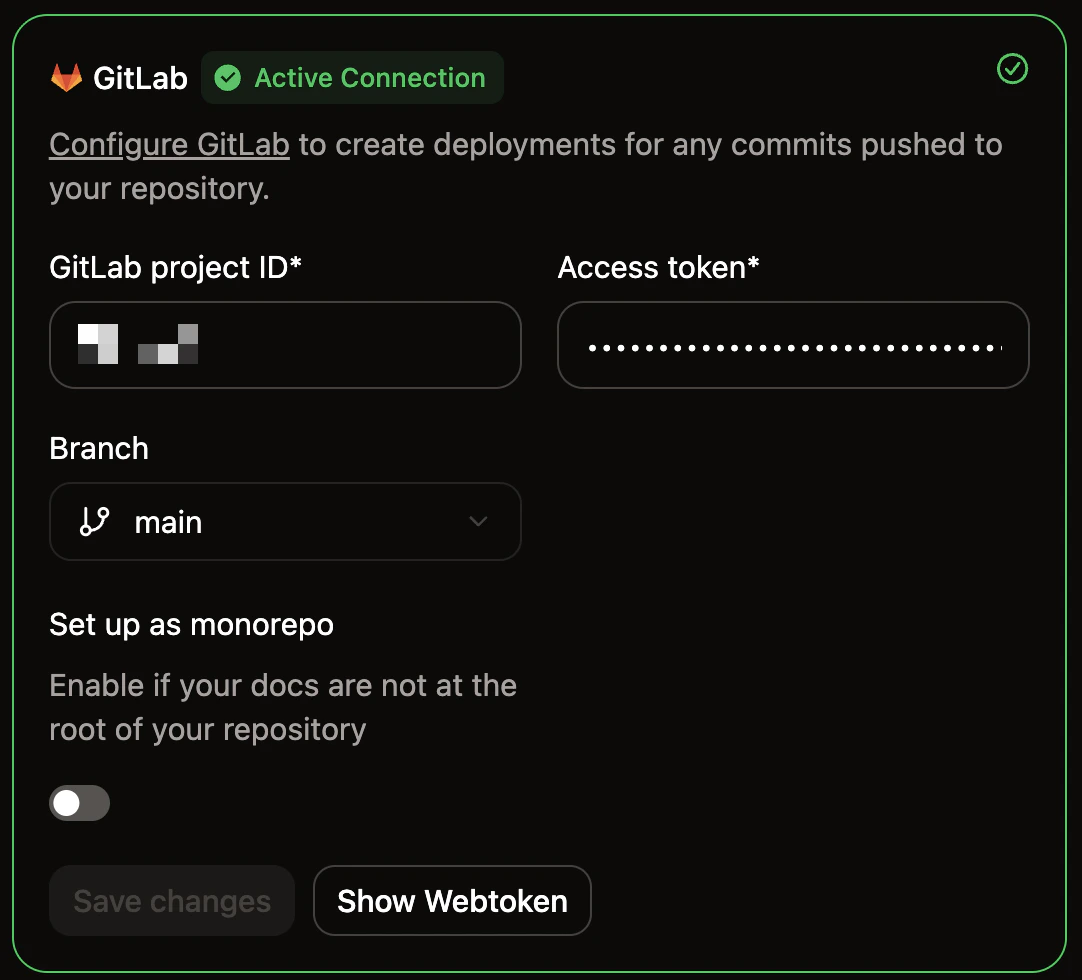
In GitLab, paste the webtoken from your Mintlify dashboard in the Secret token field.
Select events
Select the following events to trigger the webhook:
- Push events (All branches)
- Merge requests events
Verify the webhook
You should see the following settings after configuring the webhook: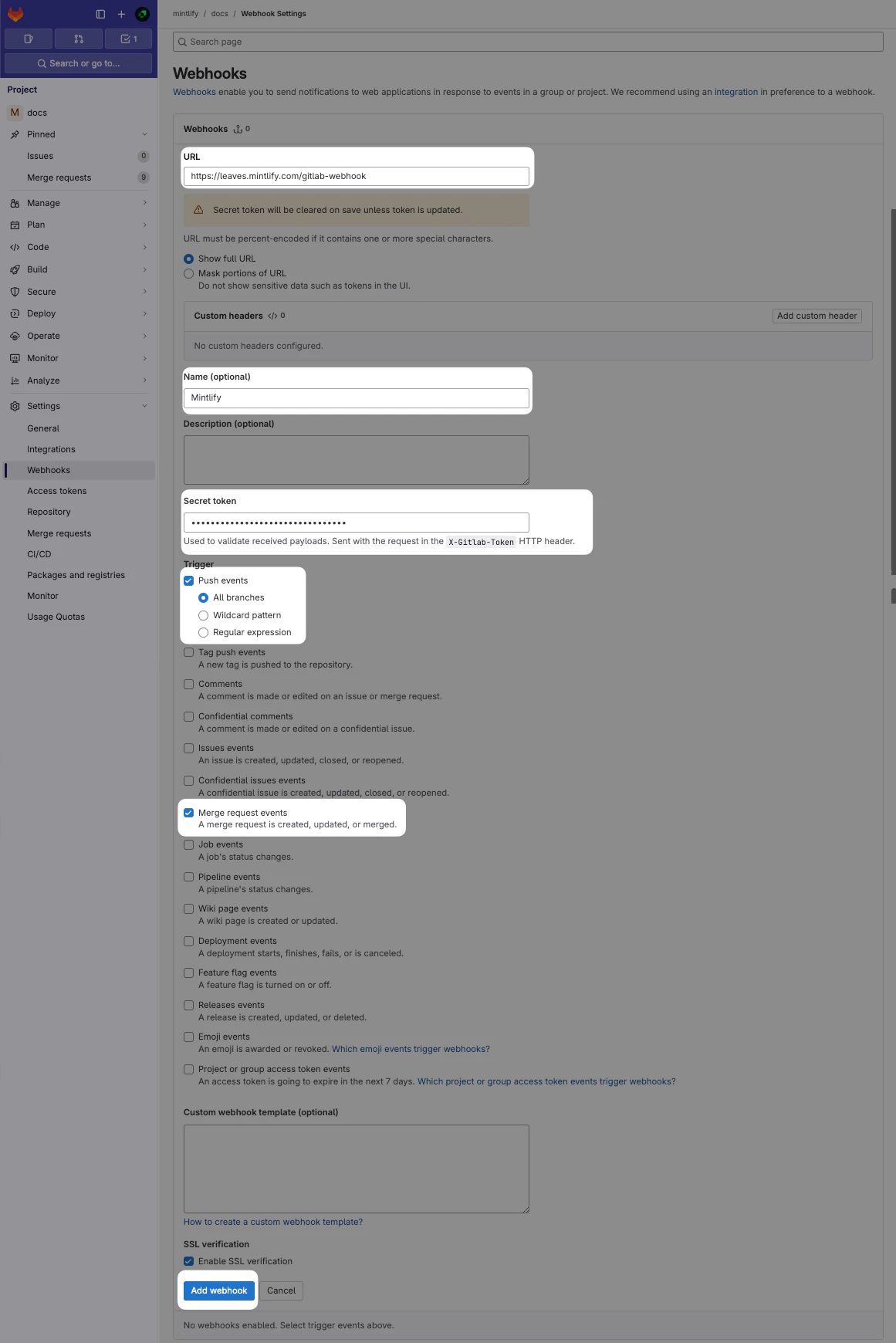
- Name: Mintlify
- URL:
https://leaves.mintlify.com/gitlab-webhook - Secret token: The webtoken from your Mintlify dashboard
- Events: Push events (All branches) and Merge requests events